September 27, 2017
Sonnax Roadshow Part IV: Additional Valve Body Repair Issues
Randall Schroeder
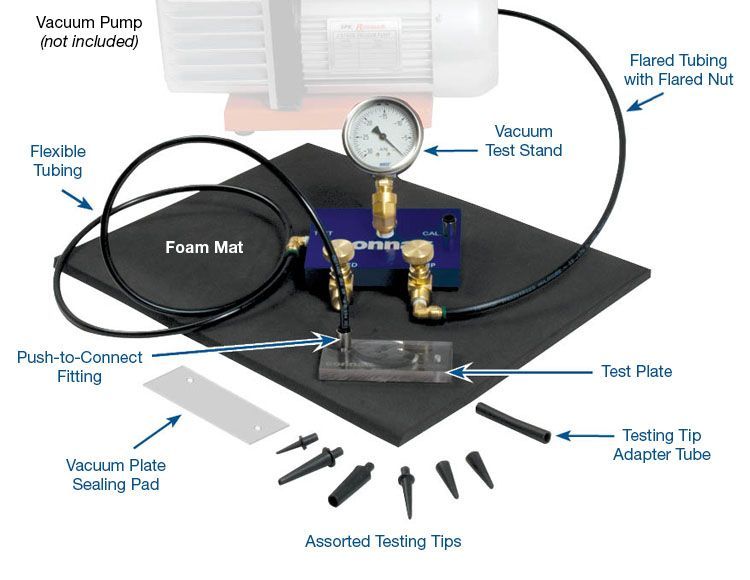
 Let’s take a closer look at vacuum testing with Sonnax vacuum test stand kit VACTEST-01K individual components on the bench, specifically the GM 4L60, 4L60-E, 4L65-E and 4L70-E pump cover and stator support tube. These are the unseen areas that can be most frustrating with failures that just don’t make sense, especially when everything air tested perfectly. There are so many hidden areas. Vacuum tests are based on real-world failures and analysis that help when installing seasoned (used) pieces and/or replacing components with new. These simple procedures prevent costly comebacks after repairs that, in the past, were easily overlooked.
Testing will require an assortment of homemade tools, and you will quickly recognize it is amazingly simple and effective. Vacuum testing should become as common as and feel as simple as air testing during a transmission rebuild. This incorporates valuable assurance, insurance and adds to the finished product of the build procedure. As we jump into these procedures, you will find that leaks overlooked in the past were undetectable using conventional testing. Thanks to vacuum testing, these unknowns will no longer be covered up or overlooked, saving you time and money.
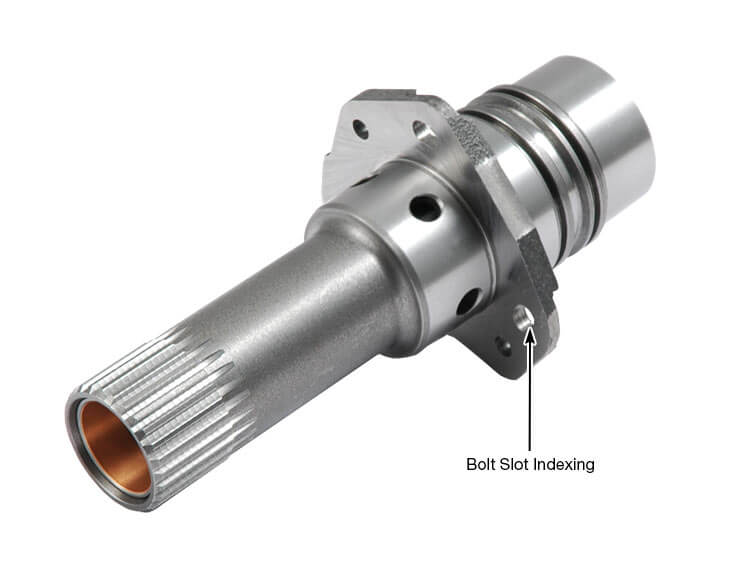
The first two components of the 4L60/E pump body to test are the pump cover and stator support tube (Figure 1). You can easily check the pump body fully assembled on the bench.
| Figure 1 – Pump Cover & Stator Support Tube |
|---|
 |
Common leak culprits that can cause grief and comebacks:
| Figure 2 – Core Plugs for Oil Delivery Passageways |
|---|
 |
Pump leaks with the stator tube installed into the pump can cause problems like:
The tools needed here are simple:
You are going to have to be creative with all the tests. As oil goes into any passage, it will come out on an opposite end somewhere feeding the component. Not sure where to test? Simply blow air in a passage and find where it goes.
Many tests are done by attaching a test nozzle to the vacuum test hose and plugging the other end of oil delivery with your finger. Sometimes to do a test, you will have to have a larger nozzle on the gauge so you can hold the rubber tip with your thumb and plug the hole on the other side of a casting with your finger. This will allow your free hand to plug the final area of the test in the tube (Figures 3, 4 & 5).
| Figure 3 – Forward Clutch Feed Test |
|---|
 |
| Figure 4 – Overrun Clutch Feed Test |
|---|
 |
| Figure 5 – 3-4 Clutch Feed Test |
|---|
 |
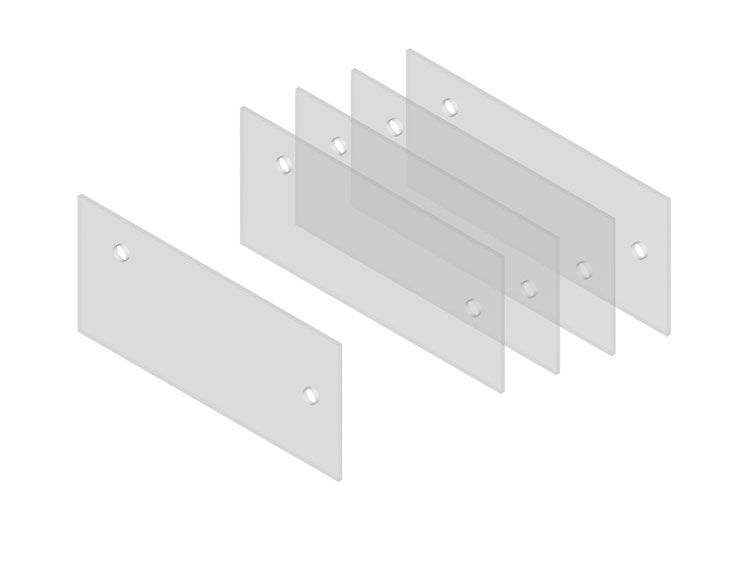
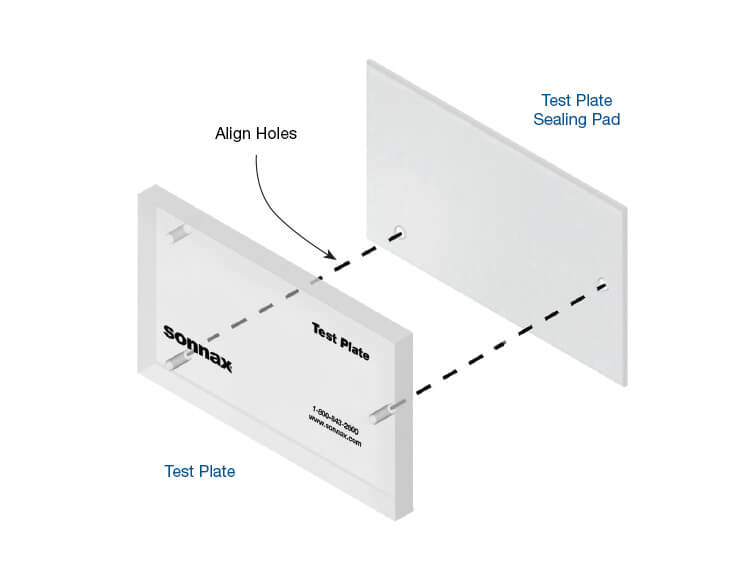
When facing unreachable areas to plug, you need to be extra creative. A great example of this is the reverse clutch feed hole that is inside the casting and typically covered with a boost valve. Using a rolled-up rubber pad held in place with a ½" extension to plug the internal hole, use the test tip on the gauge hose to complete the test (Figures 6 & 7). A Sonnax vacuum plate sealing pad works great to plug the hole. This pad is available under part number VACTEST-06 and as a component of Sonnax vacuum test plate kits and the vacuum test stand kit.
All these tests gauge the oil delivery area (from beginning to end points) to a clutch component. The reverse clutch feed test includes the cup plugs installed on the side of the cover. Testing ensures the clutch feed sleeve tube inside the stator support did not twist. Individual components can have no leak when testing as a single feed component. If 25 in-Hg on the gauge is the no-leak (sealed) result, then all these tests must be 25 in-Hg. When adding a second piece, such as the pump body onto the pump cover, you may see a 1 in-Hg loss, and 24 in-Hg is okay. If results show more (ex. 23.5 in-Hg), you should take time to flat-surface the component and test again.
| Figure 6 – Reverse Test Setup |
|---|
 |
| Figure 7 – Reverse Clutch Feed Test |
|---|
 |
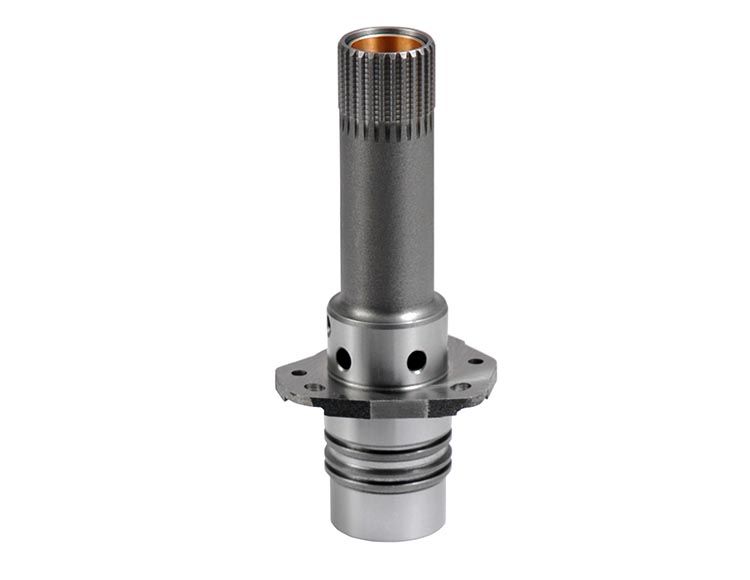
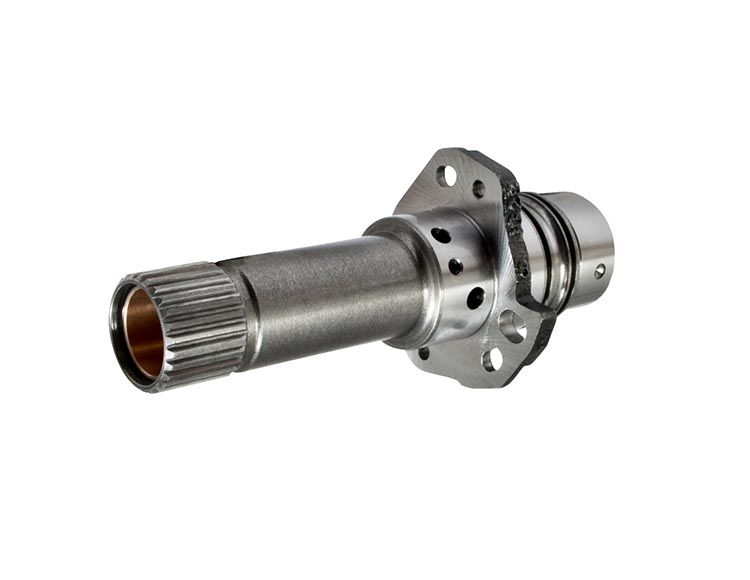
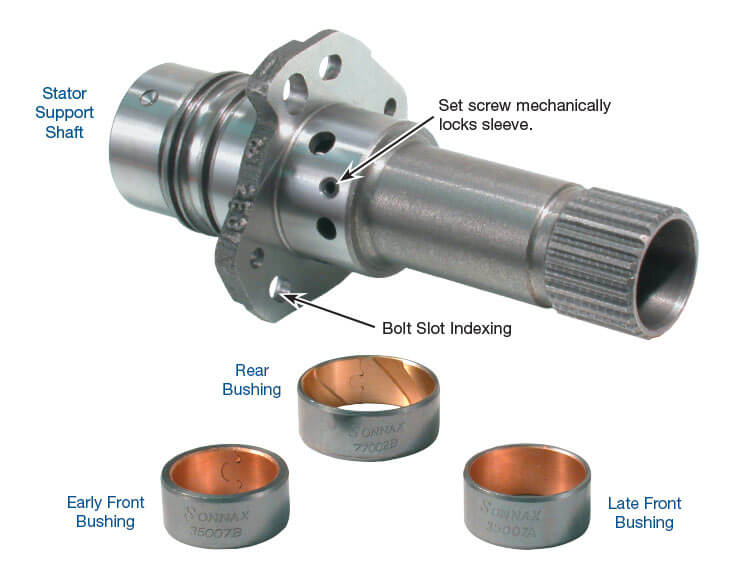
These verification tests are to eliminate leaks in the pump cover as well as the stator support tube. When tube leaks are found, replace the failed tube with a Sonnax stator support shaft.
This is one of many Sonnax articles on bench testing transmissions with vacuum, a great way to run diagnostics on a variety of common components, not just valve and pump bodies. There are so many areas to cover, and I am looking forward to working through them to make your testing even easier. Until then, keep those transmissions in good health!
Randall Schroeder is a Sonnax technical sales and training specialist. He is a member of the Sonnax TASC Force (Technical Automotive Specialties Committee), a group of recognized industry technical specialists, transmission rebuilders and Sonnax Transmission Company technicians.
September 27, 2017
Randall Schroeder
Required
Recommended
298mm Converter, reluctor style
Required
Recommended
280mm or 300mm Converter, reluctor style, '04-later.
Required
Recommended
280mm or 300mm Converter, non-reluctor style. '99-'04.
Required
Recommended
245mm or 298mm Converter, non-reluctor style, universal bolt pattern
Required
Recommended
While Sonnax makes every effort to ensure the accuracy of technical articles at time of publication, we assume no liability for inaccuracies or for information which may become outdated or obsolete over time.